

In 2016, strict regulations came into force that ensured hazardous waste was categorised properly and dealt with correctly.
Hazardous waste is waste that contains toxic properties that may be harmful to human health or the environment.
The responsibilities for each producer, carrier, and consignee (the end receiver) of hazardous waste disposal measures were made clear and introduced in the following legislation and guidance.
Hazardous and non-hazardous waste should not be mixed. Discover more guidance about hazardous waste classification here.
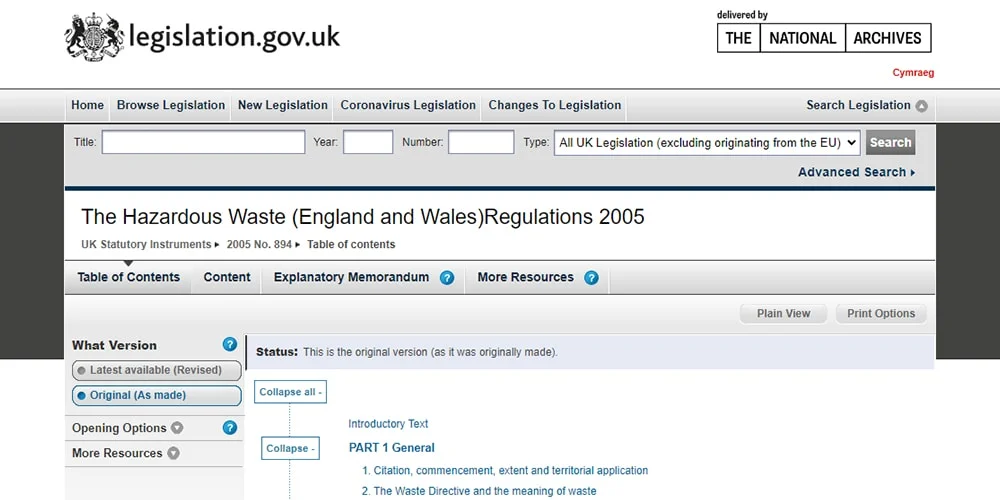
The Hazardous Waste Regulations, 2005
Hazardous waste is regulated by the hazardous waste law as of August 2005. The regulations established an enforceable system to prevent and treat hazardous waste products and materials. A single waste can be designated as hazardous if it’s listed within the legislation.
Adding to the 2005 England and Wales Hazardous Waste legislation, the new regulations now include a section not requiring hazardous waste on-premises to register with the Environmental Agency.
There must be a detailed note of how the waste was produced, a chemical and physical analysis of it, and it must be classified according to the European List of Waste also known as European Waste Catalogue.
Hazardous and non-hazardous waste should not be mixed. We’ve covered hazardous waste definition and carried out it’s detailed breakdown of hazardous waste companies. You can also discover more guidance about hazardous waste classification on the government website.
These kinds of special waste are not always necessarily dangerous to humans, but they can be harmful; this is why the term “hazardous” is so important.
More information on this subject and how Inspire Waste Management protects businesses in England from potential fines can be found on our website.
Businesses should consider hiring specialists with the proper training to dispose of hazardous waste and deal with risk that comes with disposal.
Inspirewaste prioritises these forms of testing and uses various techniques to ensure public and environmental safety.
The most commonly-produced hazardous materials include:
- Propane: often used as a fuel
- Sulfuric acid: often used in the production of fertilisers, cleaning agents, and oil manufacturing
- Asbestos waste: often discovered during demolitions and renovations of old buildings
- Carbon dioxide: often used to chill or freeze food
- Solvents: used in the production process in several industries
- Argon: often used to produce light bulbs
- Mercury: Fluorescent tubes with mercury content
- Non-edible oils: such as car oil filters
- Treated wood furniture: varnishes can ignite if not managed properly
- Pesticides: often used in farming
- Chlorine: often used in water purification, swimming pools, and bleaches
- LPG: often used in refrigeration and as a fuel
- Electronic waste and batteries: containing heavy metals, battery acid, and other hazards
Over 5 million tonnes of hazardous wastes are produced annually in the UK; in recent years, that figure has been growing by around 8% per annum.
This type of wastes are hazard to humans and to our environment, which is why hazardous waste regulations are stringent, and compliance with them is so substantial.
WE’VE GOT YOUR BACK WITH HAZARDOUS WASTE REGULATIONS
Get a quote
What are the 4 types of hazardous waste?
There are four forms of classification in regards to hazardous waste acceptance criteria.
These are used to correctly identify produced waste and control its disposal in a manner that won’t cause harm to the population or the environment.
Ignitability within waste is hazardous because it could lead to fires while being stored, disposed of or travelling.
Examples of this form of hazardous waste are loose paint in original cans, rags contaminated with cleaning products that may be flammable, oil or fuel.
Toxicity in wastes is hazardous because of the danger to human health or animal life via poisoning through ingestion or skin absorption.
Toxicity is found in antifreeze, asbestos waste and other forms of chemical waste.
Corrosive materials that rust and decompose dangerously can be considered hazardous waste.
Batteries, particularly those containing lead acid, can cause severe damage to the environment, especially if it gets into water sources.
The final form of hazardous waste classification is reactivity.
Reactivity is commonly seen in items such as aerosols. They are considered hazardous because the pressurised containers may explode if pierced or otherwise damaged.
According to introduced regulation, hazardous waste storage, collection, and disposal depend upon its classification and country of origin. You can find out more about waste types in the EWC guide (European Waste Catalogue).
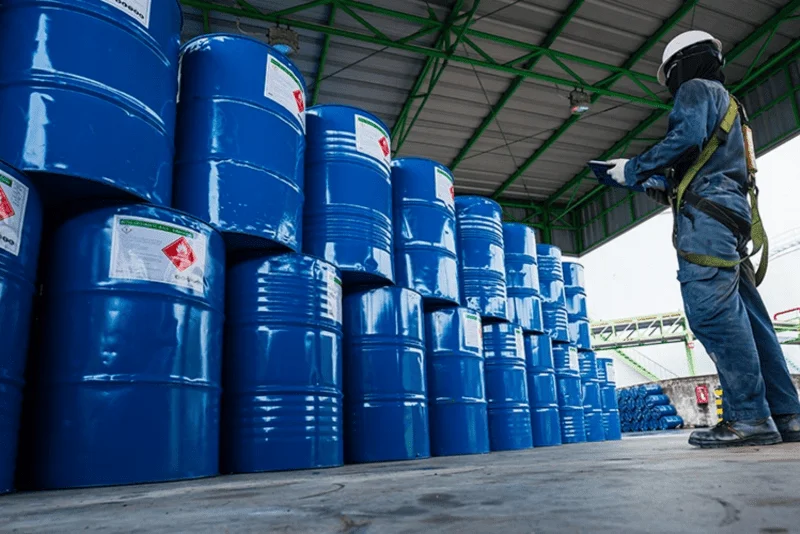
Storing hazardous waste:
- It can be stored outside, so long as it is secured correctly.
- Must be clearly labelled and defined with ingredients and codes.
- Must not be mixed with other wastes, even if they are similar.
- Keep detailed inventory for at least three years of waste on the property.
- Keep up to date with the newest hazardous waste regulations to avoid fees.
- Prevent unauthorised members of staff/public from access to waste.
- There must be systematic waste collection by professional agencies.
- There must be regular maintenance on bins and bags to ensure no leaks/rips.
- Different colour wheelie bins to help differentiate between waste types so different hazardous waste types do not mix like oil filters and fluorescent tubes for example.
- Staff are correctly trained.
- In some cases, there is a storage limit of 12 months.
- If transporting or disposing of waste, ensure a consignment note.
Hazardous waste storage regulations may depend upon where you live in the UK, so you need to be very through when deciding which regulations apply to your business properties. You can also consider hiring authorised wastes processors, like us, who follow the legislation and know how to treat waste according to the government guidance.
The methods of hazardous waste collection and disposal:
Depending on the form of hazardous waste and its regulations, Inspire Waste Management can move and transport multiple forms of this special waste for disposal and produce consignment notes if relevant.
The most well-known type of waste collection is recycling.
Recycling also applies in the cases of hazardous waste. Items such as electrical appliances, like cookers and washing machines, can be recycled.
According to their chemistry, batteries can be recycled as long as they are in the correct containers.
Recycling hazardous waste safely allows the original materials to be reused in the future.
In the cases of liquid waste removal, it is necessary to have a correctly qualified person or agency in charge of this.
Failing to do so could result in damage to the environment or human’s health, as well as expensive business consequences if liquid waste is disposed of incorrectly.
Liquid hazardous waste, particularly oil, can spread quickly through the ground and water.
Oil damage can lead to habitats becoming damaged and ecological systems being severely impacted.
These types of pollution can carry over into birds, animals and the food we eat before reaching humans. Examples of accidents involving liquid waste include the Deepwater Horizon Oil Spill in Mexico during 2010.
Incidents like these wouldn’t happen with the support of Inspirewaste, which operates throughout the UK to provide a high quality liquid hazardous waste collection service and ensure it doesn’t end up in a landfill.
Another example is incineration treatment.
Incineration is beneficial because it reduces the amount of wastes produced and stored in one place; the ash from this kind of collection is used for material recovery in other industries.
It is proven that incineration treatment prevents infection from spreading due to reduction of waste.
This is the preferred method for various industries of waste producers, especially as it is now possible to limit the environmental impact caused by incineration. We covered incineration definition and guidance before in this article about hazardous waste incineration.
Hazardous Waste Regulations Specialists
So, what are the risks if you don’t follow hazardous waste regulations?
The risks depend on the type of waste.
For example, people could find themselves with severe injuries such as burns or frostbite or asphyxiation from carbon dioxide.
According to the NFCC (the National Fire Chiefs Council), firefighters attend three hundred scenes at waste removal facilities due to incorrectly managed hazardous wastes.
These could be both at fully licenced sites (and may occur due to human error) as well as at ones that aren’t being run legally.
These sites often won’t label hazardous waste correctly.
Incidents like this, especially with the difficulty of extinguishing waste fires, can lead to heightened danger towards the firefighters as well as the general public and the environment.
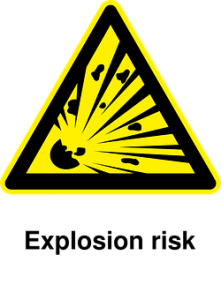
Sulphuric acid can cause severe burns and severe lung damage if it is inhaled, asbestos can cause cancers such as mesothelioma, argon can cause tissue damage, and incorrectly-stored LPG could cause a significant explosion.
There is a risk that special waste like hazardous waste could pollute the water table and be hugely detrimental to the environment – from plants and trees to wildlife.
The categorisation process has aimed to ensure special waste is handled and processed correctly to reduce that risk to people and the planet.
Any organisation that produces hazardous waste and fails to comply with the government rules could find itself being taken to court, facing the prospect of hefty fines and clean-up costs.
Any injury to a staff member or member of the public could also result in a substantial claim for damages.
Alongside the financial damage, the reputational damage to a business can also be massive.
The government has put together incident reports register on this topic to make it clear to businesses that corners cannot be cut in the cases of hazardous waste regulations.
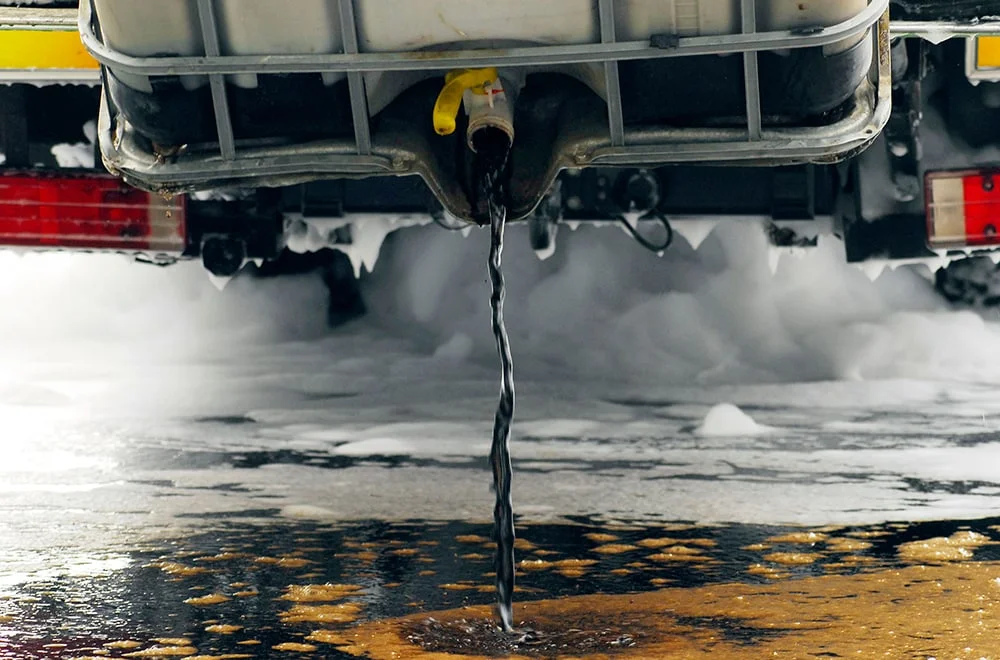
Hazardous waste related incidents
The following document “Review of Incidents at Hazardous Waste Management Facilities” published by the government contains a note on incidents between 2002 and 2013 as recorded by the government and updated regulations in the aftermath.
One prominent local case of an incident is in North Shields, England during 12-13th April 2002.
An angle grinder caught rags soaked in flammable liquid with sparks causing it to go up in flames. The fire spread rapidly throughout the site as it was met with full oil drums and other flammable waste. Five people died, and thirty-six reported injuries caused by the fire.
The fire burned for five hours before being successfully put out by firefighters fifteen hours later.
It emerged that the parent company of the special waste site (Distillex) had not correctly trained their staff on inappropriate procedures and guidance or how to store hazardous waste near the equipment.
Although the factory didn’t reopen, it later emerged that Distillex had a previous incident (January 2002) involving clouds of toxic vapour from hazardous waste, being released into the air above after chemicals overheated in the sun. This also shut down much of the city and surrounding areas due to the rise of danger.
Inspirewaste can ensure that incidents or accidents like those listed above do not occur.
We are a fully vetted and trained spec waste collection company that fully follows the government guidance and regulations.
You can find each waste disposal certificate we hold on our accreditation page, including our CHAS and ISO certifications.
The penalties for failing to comply with hazardous waste regulations:
The maximum penalty for failure to comply with hazardous waste regulations is a £5,000 fine in the most extreme cases.
The Environmental Agency may give a fixed penalty notice instead of attempting a conviction that will most likely cost £300.
In severe cases, especially those involving considerable damage or deaths, there is more chance of a court case and possible imprisonment for the guilty party according to guidance found on the Hazardous Waste (England and Wales) Regulations 2005 page.
It is a legal requirement for all waste management companies to keep detailed records of all consignment notes, every kind of waste at their properties at any given time and details on disposal for at least three years.
Individuals who hire special waste management companies are also responsible for ensuring that the consignment note and any other documents remain safe for two years in the event of an incident or investigation.
It is also worth noting that if a business operating as a waste management company is not legal, it is possible to find this out via the environment agency page. There is a public register of companies eligible to collect hazardous waste within the UK and you can find Inspire Waste Management’s page available there.
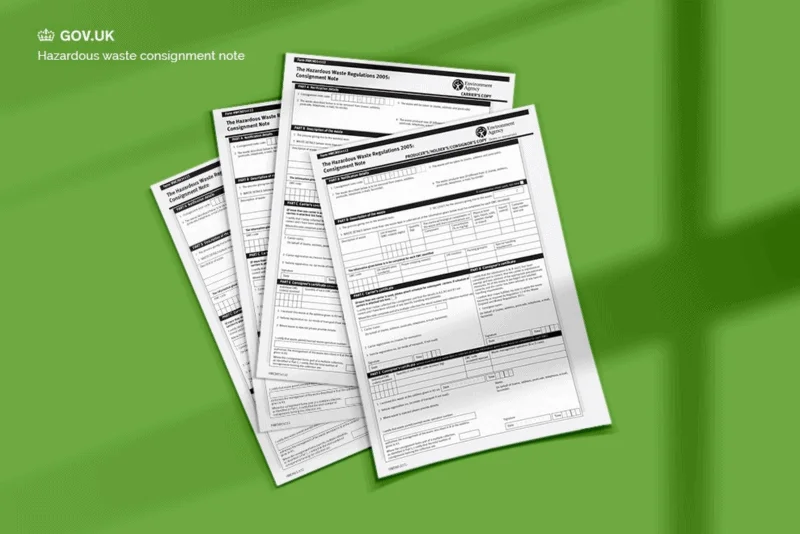
Accurate record-keeping for special waste regulations:
One way to ensure your organisation obeys the hazardous waste regulations in the UK is to keep diligent records of the kinds of regular and special waste held on the premises.
It is a requirement by the UK government that all records regarding waste must be kept on-site at all times and frequently updated by employees.
Depending on the kind of waste that your company handles, different regulations apply and the length of time that records have to be maintained may change.
For example, a landfill site in England (with the appropriate licences) has to continue to record the kind of waste for as long as they have a permit from the local authorities.
In the cases of specialised waste facilities (such as asbestos waste), they have to maintain their records for at least three to five years.
As mentioned before, transportation of hazardous waste requires a consignment note that must stay with hazardous waste up till its final destination is reached. A consignment note can be downloaded from the government page or you can use a consignment notes from your waste contractor as long as the details are the same.
KNOW HOW TO MANAGE HAZARDOUS WASTE REGULATIONS
Get a quote
The environment vs hazardous waste produced:
One of the priorities of recent hazardous waste regulations has been the protection of the environment and the safety of public health.
The UK Government’s Waste Policy since 2000 has been based on the European Waste Catalogue’s law of waste hierarchy; this means that industry has to consider the possibility of recyclable or safer materials before it produces a product.
Disposal by incineration is considered a last resort in cases where hazardous waste cannot be recycled or repurposed once it has been made safe.
Waste hierarchy also applies in landfills; the UK and Welsh governments have placed restrictions on how much of certain types of waste can be at one site at any given time. This is to encourage further recycling and the reuse of materials otherwise thrown away.
The Environmental Agency has strictly prohibited the disposal of hazardous liquid substances, oil, tires, batteries and other particular materials at landfill sites around the UK.
This lowers the chances of an accident (such as a large fire) occurring at landfill and waste management sites.
They also aim to lower the amount of hazardous waste produced across England and Wales by finding new methods of creation and recycling.
Hazardous and less harmful waste should never be combined, as stated under the 2004 Waste Acceptance Criteria regulation guidance. This form of testing should be performed by professionals after the waste has been determined to be a possible danger.
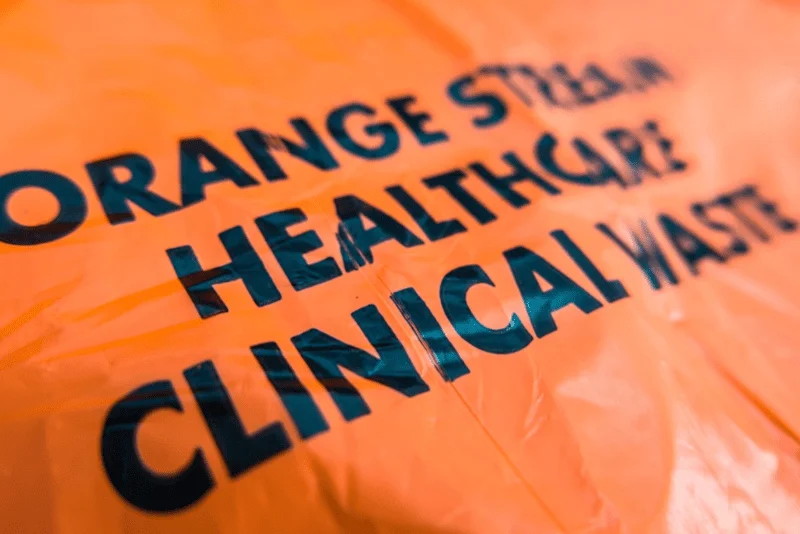
Duty of care and hazardous waste regulations:
It isn’t just waste management companies that have a responsibility for caring for the environment; it is up to the waste producers of the refuse as well.
This is known as the “duty of care”.
As an individual, the government states that people should try to take responsibility for the amount of waste they produce and how it’s recycled. This is as simple as placing waste into recycling bins or going to a waste facility with large or hazardous waste.
Suppose a person hires a hazardous waste management company. In that case, it is their responsibility to ensure that they are accredited and registered with the environment agency to dispose of waste legally.
However, most hazardous waste is not generated by individuals but by companies.
An example of this is a business that handles construction, demolition, industry and, in some cases, agriculture.
All waste carriers and management companies must adequately contain waste and preferably have it disposed appropriately and ecologically with a consignment note when applicable.
This could be through a variety of methods, but all of them will consider the duty to take appropriate measures as defined in safety guidance legislation for England, Wales and Scotland.
Who is affected by this regulation?
This policy applies to anyone who produced, dealt with, carried or received hazardous substance for collection, treatment, handling and disposal. It is detailed in a supplemental guidance leaflet on hazardous wastes.
How to comply?
Newest hazardous waste regulation became effective in 2005. The replacement was the 1996 Law on Special Waste Protection. Producers of hazardous materials must register their establishments with the Environmental Agency England and Wales and disclose quarterly reports regarding the disposal process. The directive addresses issues arising in the limited available capacity of landfill sites in the UK which includes increasing dumping volumes from treatment centres and transport sites. Inspire Waste can help you through this process and provides quarterly reports on waste.
Get a quote for Hazardous Waste Management Services
Get a quote
How do I choose the right waste management company that complies with hazardous waste regulations for my business?
Look for a company with consultants with a track record in dealing with hazardous waste, such as Inspire Waste Management. They will understand the complex hazardous waste regulations associated with it and help you ensure your waste is correctly categorised.
Although based in the North East of England, they are a business that operates across the entirety of the UK and works to ensure service within seven days.
They manage the waste of small businesses in the local area as well as more prominent companies and large charities.
Everything necessary for further knowledge is available in one place, either via our telephone number or website.
Every person who works for Inspirewaste has been given the most up to date training in all manners of hazardous waste regulations and have all the required certifications.
You never need to worry about compliance in regard to waste regulations. Inspirewaste is well known for operating within the rules.
What Inspire Waste Management offers:
Inspirewaste offers a wide range of regulation abiding hazardous material removal and other services. These include:
- Vacuum tanker hires for transporting and safely disposing of liquid waste such as contaminated water or other substances without placing it in a landfill.
- WEEE and other electrical appliances waste collection, these forms of waste can cause accidents if not correctly destroyed or recycled by experts.
- Hazardous waste removal is available, which will be safely labelled and transported to the proper facilities for disposal. This could be asbestos, paint cans or medical waste from hospitals.
- Construction waste management is available for building sites. This could be to remove rubble safely or to ensure the destruction of insulation or asbestos in old bricks. This kind of managing waste works to lower the amount of waste being collected in landfills, as per hazardous waste regulations.
These kinds of waste are not always necessarily dangerous to human health, but they can be; this is why the term “hazardous” is so important.
We work in accordance to European Waste Catalogue (EWC) that applies in England and specifies the particular codes needed to dispose of waste and guidance to maintain hazardous waste regulation standards. These must be abided by to prevent danger to ecological systems and human health.
Mixing hazardous waste and non-hazardous waste is strictly prohibited and may lead to a severe fine. You can avoide paying fees by hiring authorised experst who can advise whether you’re exempt from some rules in line with legislation in England.
Get in touch for more information on avoiding waste offence and to find out how Inspirewaste protects businesses and waste producers from potential fines by taking control of waste you produce or substances that we then can collect, process, transport and have utilised.
It is vital for businesses to hire specialists with the proper training to dispose of hazardous waste.
Inspirewaste prioritises these forms of training and uses a variety of techniques to ensure public and environmental safety.
DO YOU NEED ADVICE FROM OUR INSPIRE WASTE MANAGEMENT TEAM about hazardous or non-hazardous waste?
Get a quote below for your business in England, Wales or Scotland or call 0800 002 9282 to speak to our team of experts on hazardous waste regulations.